
As 3D printing becomes increasingly popular, choosing the right filament for your project is crucial. Two of the most commonly used filaments are PETG and PLA, each with its own unique characteristics and strengths. PETG is known for its durability and chemical resistance, while PLA is praised for its ease of use and biodegradability. But which filament has the greatest strength?
Understanding the differences between PETG and PLA
PETG, short for polyethylene terephthalate glycol-modified, is a thermoplastic polyester that features excellent durability and toughness. It is known for its high impact resistance, making it suitable for applications that require resistance to mechanical stress or chemical influences. PETG is also highly resistant to moisture and weather, which makes it a popular choice for outdoor applications.
PLA (polylactic acid), on the other hand, is a biodegradable thermoplastic derived from renewable sources like corn starch or sugarcane. PLA is easy to print and offers good dimensional accuracy and stability. However, it is less durable than PETG and is more prone to deformation under stress or high temperatures.
Comparisons and considerations regarding strength
Tensile strength refers to a material's ability to withstand pulling or stretching forces without breaking. PETG is known for its high tensile strength, making it suitable for applications that require structural integrity and durability. PLA, conversely, has a lower tensile strength, meaning it may not hold up as well under high stress or heavy loads.
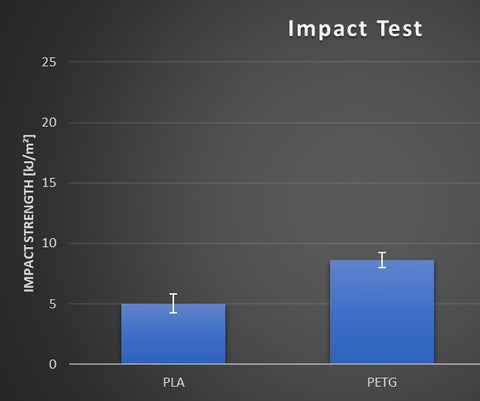
In terms of impact resistance, PETG outperforms PLA. PETG can withstand impacts and sudden forces without cracking or breaking, making it an excellent choice for parts that may be subjected to rough handling or accidental drops. While PLA is biodegradable and easy to print, it is more prone to deformation or fracture upon impact.
When choosing between PETG and PLA, consider your project's requirements for strength and durability. If you need a filament that can handle heavy loads and impacts, PETG may be the better choice. However, if your project has less demanding strength requirements and you value biodegradability, PLA could be a suitable option.
What is the difference between PET and PETG plastic?
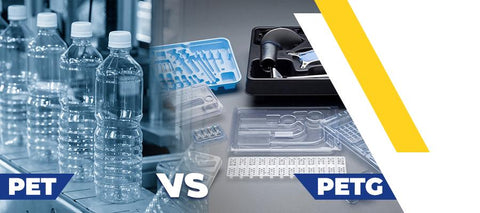
When discussing the comparative analysis of PETG and PLA, it is important to clarify the difference between PET and PETG plastic. PET, short for polyethylene terephthalate, and PETG, short for glycol-modified polyethylene terephthalate, are both thermoplastic polymers used in various applications.
The main difference between PET and PETG lies in their chemical composition. PET is a stiff, clear, and highly solvent-resistant material frequently used for beverage bottles and food packaging. PETG, on the other hand, is a modified version of PET with glycol added to increase flexibility and impact resistance.
Due to its flexibility and toughness, PETG is often preferred for applications where durability and strength are important, such as 3D printing, medical devices, signage, and protective packaging. PET, meanwhile, is valued for its rigid structure and crystal-clear transparency, making it suitable for products requiring high clarity, such as water bottles and food containers.
Application and versatility of PETG and PLA
Both PETG and PLA have a wide range of applications, but their strengths lie in different areas. Due to its flexibility and impact resistance, PETG is excellent for 3D printing, medical devices, signage, and protective packaging. Its ability to withstand rough handling and potential impacts makes it an excellent choice for applications where durability is paramount. Furthermore, its transparency makes it particularly attractive for certain projects where visual clarity is important.
On the other hand, PLA offers a number of advantages. PLA is biodegradable, derived from renewable resources, and has a lower carbon footprint compared to other plastics. It is frequently used for food packaging, disposable cutlery, and various consumer products. Its biodegradability makes it an environmentally friendly option, especially for projects where sustainability is a priority.
When considering the use of PETG or PLA, it is essential to analyze the specific requirements of your project. Factors such as flexibility, impact resistance, transparency, or biodegradability play an important role in deciding which material is the right one.
Is PETG plastic BPA-free?
Bisphenol A, commonly known as BPA, is a chemical compound found in many types of plastics. It raises concerns regarding its potential health effects, particularly in relation to hormone disruption. Therefore, it is important to know whether PETG plastic, one of the materials studied, is BPA-free.
Unlike certain types of plastic such as polycarbonate, which may contain BPA, PETG is considered BPA-free. PETG is composed of PET (polyethylene terephthalate) and glycol, neither of which is known to cause similar health concerns as BPA. Therefore, PETG can be considered a safer alternative for plastic materials.
However, it should be noted that while PETG may be free of BPA, it is always recommended to check the specific product or manufacturer's specifications to ensure that the materials used meet the safety standards you require.
What are the disadvantages of PETG?
While PETG offers numerous advantages in terms of strength, durability, and transparency, it also has some disadvantages that should be considered. One of the main drawbacks of PETG is its susceptibility to scratches. Compared to other plastics, PETG is more prone to surface blemishes and scratches. This can be particularly noticeable in high-use applications such as protective cases or displays.
Additionally, PETG has a lower heat resistance compared to other materials like PLA. It tends to soften at higher temperatures, which can limit its use in applications exposed to high heat over extended periods.
Another important aspect is the tendency of PETG to absorb moisture. When exposed to humid environments, PETG can absorb water molecules, leading to reduced mechanical properties and potential issues with dimensional stability.
Conclusion: Selecting the right filament for your project
In conclusion, the decision between PETG and PLA ultimately depends on the specific requirements of your project. While PETG offers impressive strength and durability, it is more susceptible to scratches and has lower heat resistance. PLA, on the other hand, is less scratch-resistant and has better heat resistance, but it is not as stable as PETG.
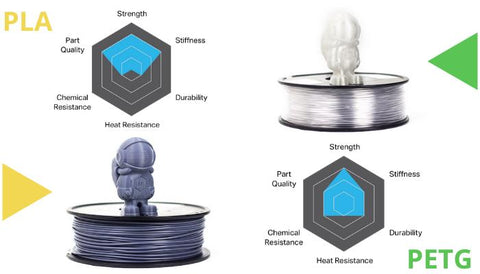
Consider the application of your project and the environmental factors it will be exposed to. If you need a material that can withstand heavy wear or prolonged exposure to high temperatures, PETG may be the better choice. If, however, scratch resistance and heat tolerance are less critical, PLA could be a suitable option.
Ultimately, it is important to evaluate the strengths and weaknesses of each material and make an informed decision based on the specific requirements of your project. In the final section of this blog series, you will find a comprehensive comparison between PETG and PLA, making it easier for you to select the right filament for your next 3D printing project.
FAQS
Q1: What are PLA and PETG filaments, and how do they differ?
A: PLA (polylactic acid) and PETG (polyethylene terephthalate glycol) are two commonly used 3D printing filaments. PLA is a biodegradable thermoplastic made from renewable resources like corn starch, while PETG is a thermoplastic polyester. The main difference is that PETG is more durable and flexible than PLA, which is stiffer but easier to print.
Q2: Which filament is easier to print, PLA or PETG?
A: PLA is generally easier to print, especially for beginners. It has a lower printing temperature and adheres well to the print bed, reducing the risk of warping or adhesion issues. PETG, conversely, requires higher temperatures and is more prone to issues like stringing and bed adhesion.
Q3: What are the key properties of PLA and PETG filaments?
A: PLA is known for its biodegradability, ease of printing, and vibrant colors. It is frequently used for decorative prints and prototypes. PETG offers excellent layer adhesion, impact resistance, and durability, making it suitable for functional parts, mechanical components, and objects that must withstand some wear and tear.
Q4: When should I choose PLA over PETG or vice versa for my 3D printing project?
A: Choose PLA if you value ease of use, biodegradability, and a glossy finish for non-functional parts. Opt for PETG if you need stronger, more durable parts with good layer adhesion, or if your project requires parts that will be exposed to higher temperatures. When deciding between PLA and PETG, consider the specific requirements of your 3D printing project and the material properties that best match those requirements.
——————————————————


